




Dissecting 2026 RAM Component Prices: Market Dynamics Defying Conventional Wisdom

Rethinking RAM Pricing Trends: Beyond Supply and Demand
In 2026, the RAM component market continues to perplex analysts as price movements diverge from traditional supply-demand models. While conventional wisdom suggests that increased production capacity should drive prices down, recent data indicates a paradoxical stabilization and, in some segments, even price appreciation. This phenomenon can be attributed to strategic inventory management by manufacturers who are leveraging scarcity as a tool to sustain margins amid volatile demand cycles.

The Influence of Geopolitical Trade Policies on RAM Prices
Market observers often overlook the nuanced impact of geopolitical tensions on component costs. The imposition of export controls and tariffs, particularly between major semiconductor-producing countries, has introduced an unpredictable layer to pricing strategies. This has compelled manufacturers to diversify supply chains, inadvertently increasing logistics costs that are partially passed on to end consumers, thus creating localized price disparities that defy global trends.
[IMAGE_2]
Counterintuitive Insight: The Role of Memory Density in Price Inflation
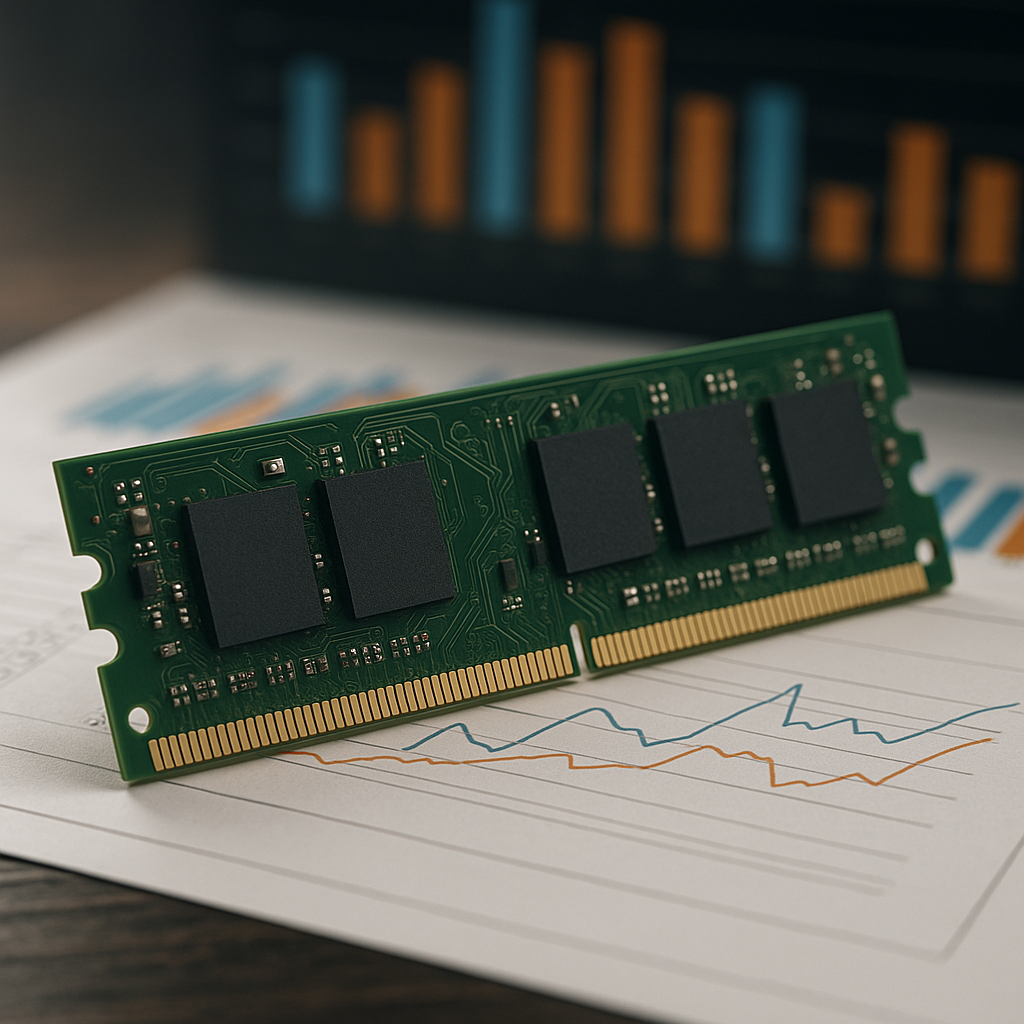
Contrary to the prevalent belief that higher-density RAM modules should be cheaper per gigabyte due to economies of scale, 2026 data reveals an inverse trend. High-density modules are commanding premium prices, driven by a surge in demand from AI and machine learning applications requiring large memory footprints. This demand outpaces manufacturing advancements, leading to bottlenecks in production lines optimized primarily for mid-range densities.
Debunking the Myth: Technological Advancement Always Lowers Component Prices
It is a common misconception that technological progress in semiconductor fabrication inevitably reduces component costs. However, the integration of cutting-edge materials and processes, such as extreme ultraviolet lithography (EUV) and 3D stacking, has temporarily inflated production expenses. These innovations, while improving performance and power efficiency, have introduced complexity and yield challenges that manufacturers offset by maintaining or increasing RAM prices.
[IMAGE_4]
Market Segmentation and Pricing Strategies: A New Paradigm
RAM suppliers in 2026 are increasingly adopting segmented pricing strategies tailored to specific end-user industries. For example, modules designed for automotive and aerospace sectors carry higher premiums due to stringent reliability certifications and lower production volumes. This divergence in pricing contradicts the assumption that bulk consumer markets solely dictate overall RAM prices, highlighting a more fragmented and sophisticated market landscape.

Conclusion: Navigating the Complex Terrain of RAM Component Pricing
Understanding RAM prices in 2026 requires moving beyond simplistic supply-demand frameworks and embracing the multifaceted influences of geopolitical factors, technological innovation costs, and strategic market segmentation. Stakeholders must recalibrate expectations, acknowledging that price behaviors may reflect deliberate manufacturer strategies and emerging market demands rather than straightforward production economics.
0 Comments
Recommended Comments
There are no comments to display.
Please sign in to comment
You will be able to leave a comment after signing in
Sign In Now